Common Order Flow Analysis Mistakes
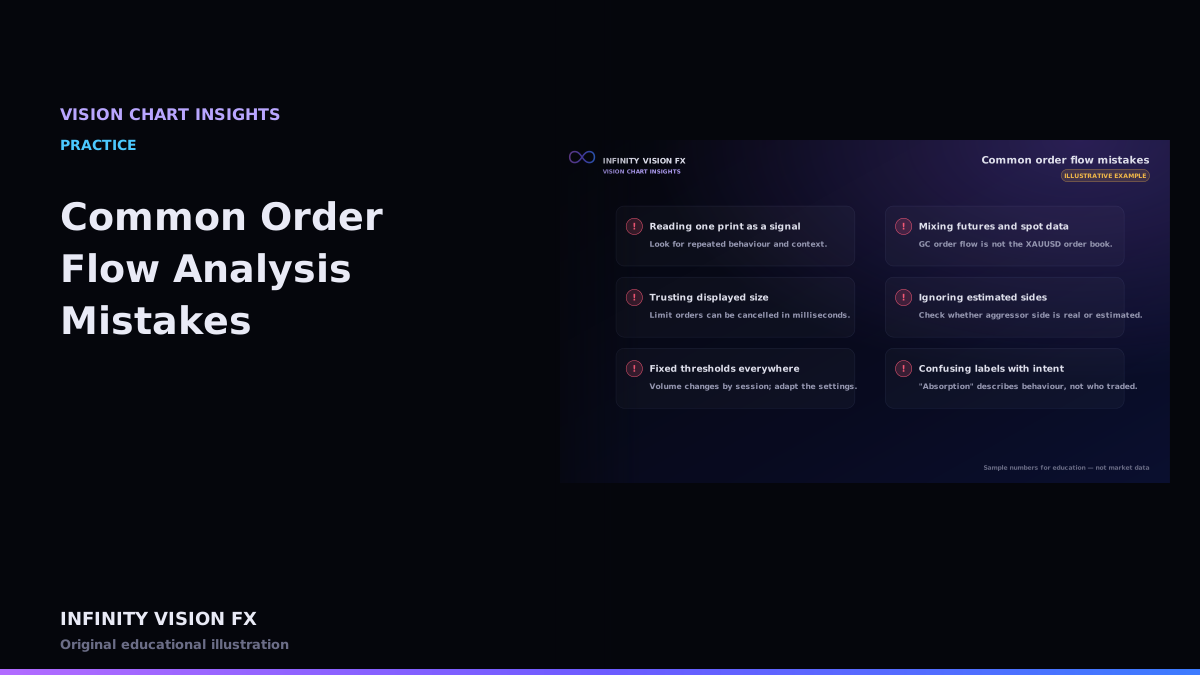
Order flow tools are powerful and detailed, which also makes them easy to misread. These are the most common mistakes.
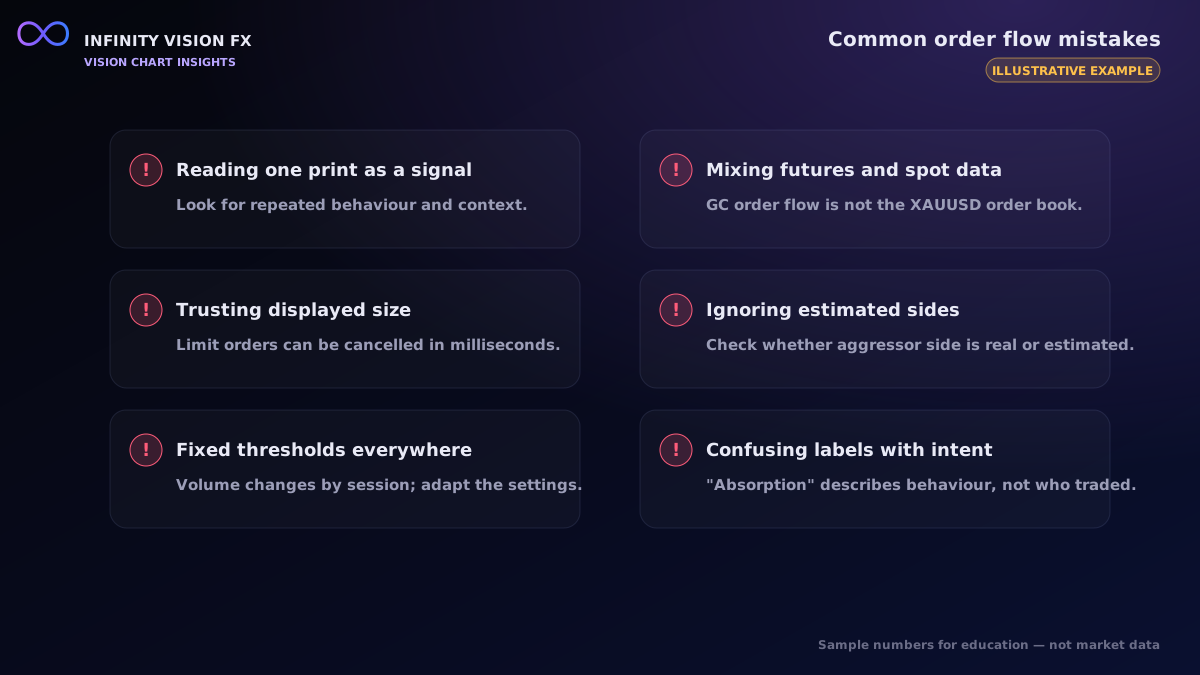
1. Reading one print as a signal
A single big trade or one imbalance rarely means much alone. Look for repeated behaviour at meaningful levels.
2. Mixing futures and spot
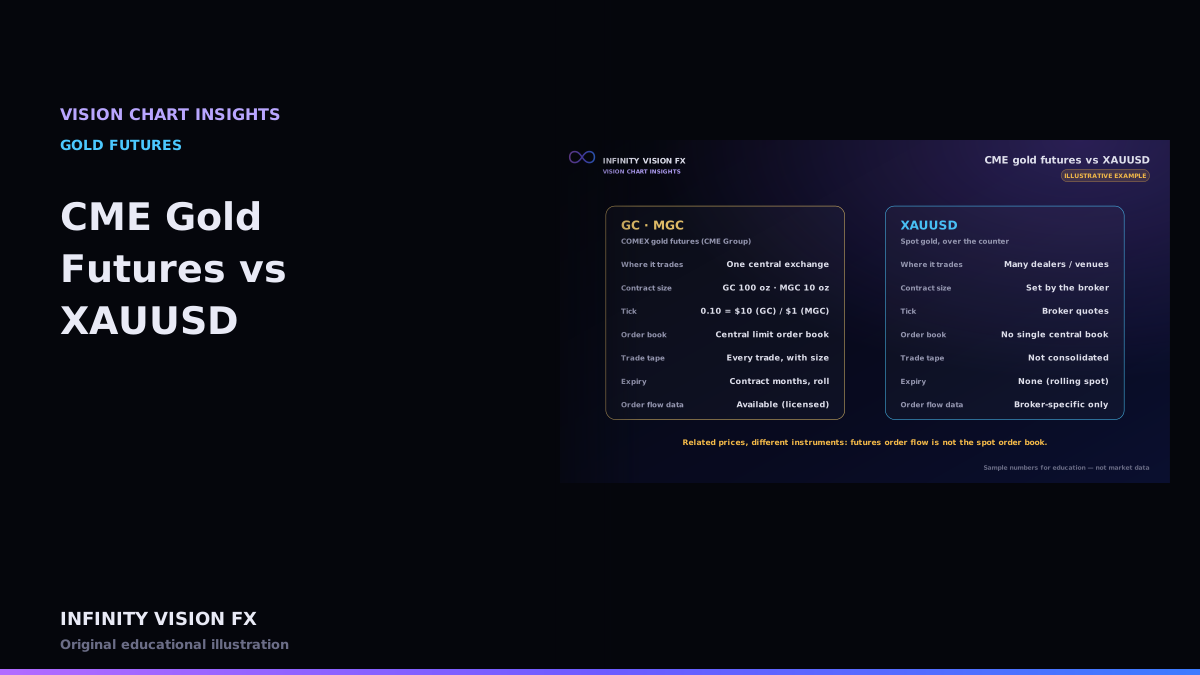
COMEX futures order flow is not your broker's XAUUSD order book. See CME Gold Futures vs XAUUSD.
3. Trusting displayed size
Limit orders can be cancelled in milliseconds, and icebergs hide size. Confirm with executed trades.
4. Ignoring estimated data
If the aggressor side is estimated, delta and footprints are estimates too. VISION CHART labels them.
5. Using fixed thresholds everywhere
Volume during the Asian session is a fraction of New York's. A "big trade" or "high volume" threshold should fit the session and the contract (GC vs MGC).
6. Confusing labels with intent
"Absorption", "iceberg" and "big trade" describe behaviour. None of them identifies who traded or why.
7. Treating backtests as promises
A historical pattern test shows how price behaved after a pattern in the past. It does not include fees, slippage, latency or queue position, and markets change. VISION CHART's Pattern Builder shows sample sizes and hides percentages below 20 matches for this reason.
8. Forgetting the contract roll
Comparing levels across a futures roll without adjusting for the price difference between contract months creates false gaps and false levels. Check the contract symbol and roll date.
9. Over-fitting settings
Adjusting thresholds until a chart "shows" what you expected is a form of hindsight. Pick settings, test them on many sessions, and keep them stable.
A safer routine
- Start with context (profile, session, higher timeframe).
- Gather several independent pieces of evidence.
- Write down what would prove your reading wrong.
- Manage risk independently of any tool.
Educational content only, not financial advice. Examples and illustrations use sample numbers and are not observations of real market activity. Order flow describes past and present activity; it does not predict prices.